What if some of the things shaping your ministry did not come from Jesus?
That is not an accusation. It is a question many senior and lead pastors already carry and rarely say out loud. You can love Christ, open the Word every week, and still be formed by forces He never assigned to you: attendance, programs, comparison, tradition, control, and the constant pressure to produce.
The flock can tell the difference even when the calendar looks faithful. One kind of ministry manages people. The other shepherds them.
A multiplying discipleship culture is not built by adding another church program. It is built when the pastor is being discipled by Jesus again, and then disciples others the same way.
To purchase the book available, please click here.
The system will disciple you if Jesus does not
Every pastor is being discipled by something. If it is not the voice of the Shepherd, it will be the voice of the system.
The system is not always loud. It sounds like a healthy question that has lost its soul. How many came? Did the new series land? Are we keeping up with the church across town? Why is the midweek gathering down? Can we launch one more pathway so people stay engaged?
None of those questions is evil. Attendance matters because people matter. Programs can serve real needs. The danger is when those tools become the teacher. Over time a pastor can preach Christ and still be trained by metrics Jesus never used to measure a shepherd.
Jesus asked Peter, “Do you love Me?” Then He said, “Feed My sheep” (John 21:15-17). He did not ask how the room felt. He did not ask Peter to invent a system. He asked for love, then for care.
Peter later wrote the same charge to elders: shepherd the flock of God among you, not under compulsion, not for shameful gain, not as those who lord it over those in your care, but as examples (1 Peter 5:2-4). That is a different formation than the one the world system offers. The world system rewards control, visibility, and output. Jesus forms shepherds who feed, watch, and walk among the people.
If you want the wider frame for how worldly and religious systems shape a life without being seen, Beyond the System names that water we all swim in. What follows here is the pastoral version of the same question: what has been discipling your pulpit?
Performance in the study is still performance
Many pastors were trained to handle the text with care, and they should. Study is obedience. The issue is the tree we study from.
There is a way to open Scripture from the Tree of Life: hungry, surrendered, listening, ready to obey before we teach. And there is a way to open it from performance: mining for a better outline, a tighter point, a quote that will land, a series that will hold the room. One produces overflow. The other produces pressure with a verse attached.
Jesus often withdrew to pray (Mark 1:35). The crowds were already forming. He still went to the Father first. A pastor who skips that order will eventually preach as a man keeping a machine alive.
Ask an honest question of last week’s study:
- Did I meet God in this text, or only harvest it?
- Would I still need this passage if no one was listening on Sunday?
- Am I preparing to feed sheep, or to survive a platform?
Those questions will not show up on a dashboard. They will show up in the people, over years.
Preaching from overflow, not from pressure
Pressure preaching can still be orthodox. It can still be moving. It can still fill a room. It cannot make disciples who make disciples, because the preacher is modeling a life the people cannot imitate. They can admire it. They cannot follow it home.
Overflow is different. Overflow means the Word has already done its work in the shepherd, and Sunday is what ran over the rim. The people do not need a more impressive pastor. They need a pastor who is actually with Jesus.
That kind of preaching does not require a new series brand. It requires a different source. The Great Commission is “make disciples,” not “build a bigger ministry machine” (Matthew 28:19-20). Teaching them to obey everything Jesus commanded will almost always look smaller and slower than the system prefers. It will also look more like Jesus.
How to build a multiplying discipleship culture without another program
If the first instinct is to launch something, pause. Another class can be a way of avoiding the slower work of actually discipling someone.
A multiplying culture has a few ordinary marks.
The pastor is a disciple, not only a director. Someone knows your life, not only your sermons. You are confessing, obeying, and being asked the same questions you ask others.
Discipleship has a face. It is one-on-one and small, not only a course people complete. Curriculum can help. Curriculum cannot replace a person who walks with a person. Rise Beyond Ordinary was written to move a group from talking about discipleship into practicing it. Natural Discipleship exists so churches can put a clear path under that relationship instead of inventing a new machine every year.
Success is fruit Jesus produces, not activity you can schedule. Look for repentance, love, households learning to pray, people who can open the Bible with someone else, new shepherds quietly forming. Ezekiel 34 still stands as a warning to shepherds who feed themselves and not the flock. The opposite is not a better org chart. The opposite is feeding people.
You stop measuring only what the system knows how to count. Attendance can be noted. It cannot be worshiped. Programs can be evaluated. They cannot become the disciple-maker. If a ministry cannot survive without the pastor holding it up, it is not multiplying. It is depending.
None of that requires a rebrand. It requires the courage to let some good-looking activity die so that actual shepherding can live.
This is not another church-growth system
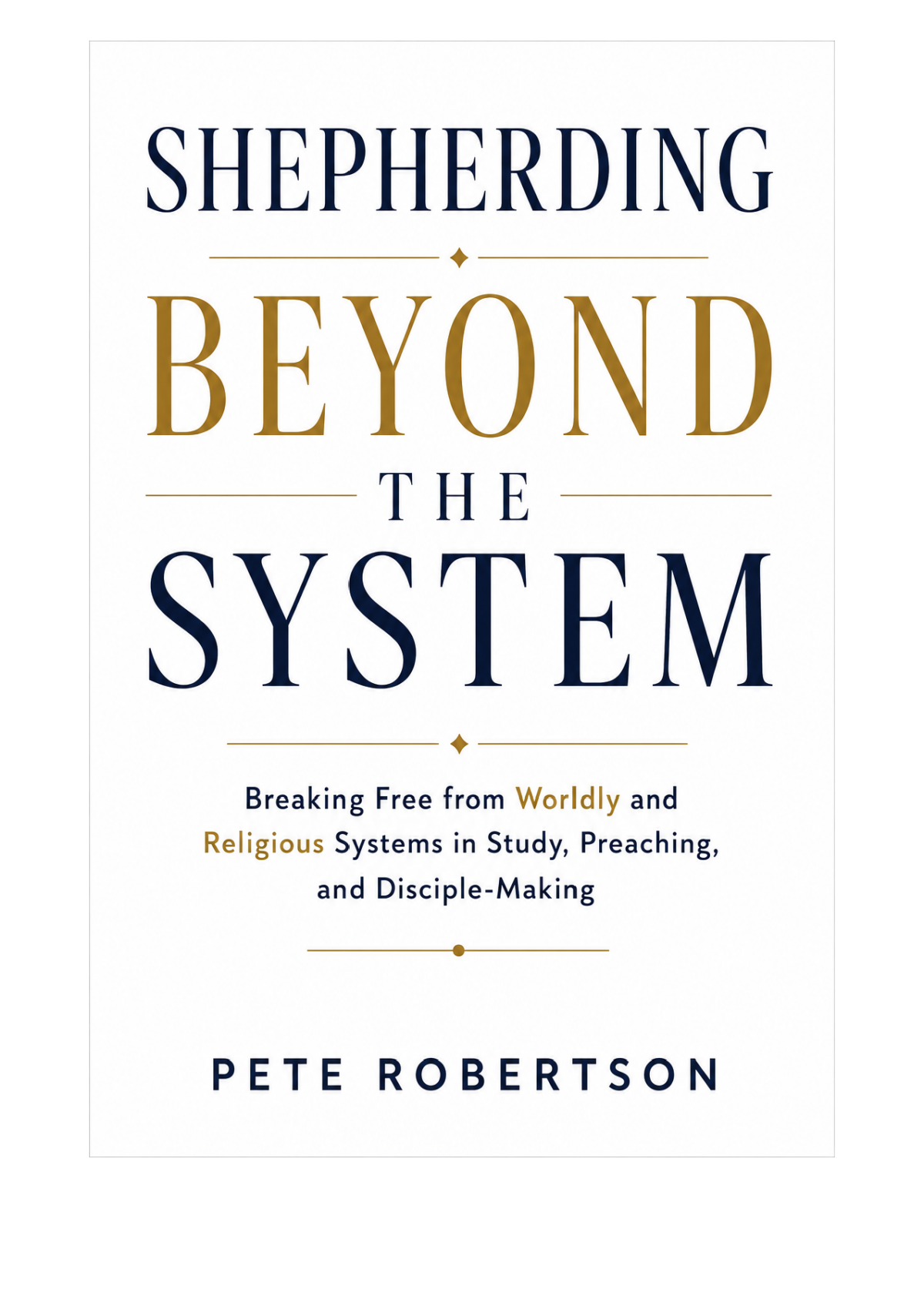
Shepherding Beyond the System was written for senior and lead pastors who want to take an honest look at what has been shaping the way they study, preach, lead, and build the church.
It is for the pastor who loves Jesus and is tired of being discipled by performance, comparison, tradition, control, attendance, programs, and the pressure to produce. It is an invitation to recognize those influences, discern their source, and return to leading from a deep relationship with Christ.
You will not find a new model to install. You will find a call to study Scripture from the Tree of Life, preach from overflow rather than pressure, shepherd people instead of managing ministry, build a multiplying discipleship culture, and measure success by the fruit Jesus produces through His people.
If you are ready to examine what has been discipling your pulpit, and to rediscover what it means to shepherd from relationship with Jesus, start there.
A first step this week
Do not add a meeting. Take one existing relationship and tell the truth in it.
Ask a fellow pastor or an elder, “What do you think has been discipling me?” Then listen. Open John 21 and sit with the question Jesus asked Peter before He gave him sheep. Let the Lord deal with the need to produce before you build anything else for Him.
If a book would help you name what you are already sensing, Shepherding Beyond the System is the place to begin. For the larger diagnosis of the world and religious systems around that pulpit, read Beyond the System beside it.
To purchase the book available, please click here.
Frequently asked questions
Can a church multiply disciples without launching another program?
Yes. Programs can serve discipleship, but they cannot replace it. Multiplication happens when a disciple makes a disciple in real life: Scripture, prayer, obedience, and time. If the only path you have is a class, you have a course, not a culture.
How do I know if the system has discipled me as a pastor?
Watch what makes you afraid. If a dip in attendance, a comparison with another church, or a quiet Sunday shakes your identity more than a dry week with Jesus does, the system has been teaching you. Fear is often the curriculum.
Is this anti-church, anti-structure, or anti-excellence?
No. Jesus is building His church. Shepherds should work hard and work well. The issue is source and aim. Structure that serves the flock is a gift. Structure that disciples the pastor into control is a yoke.
Where should a pastor start?
Start with the study, not the org chart. Return to the text as a disciple. Then shepherd one person, not a new department. Shepherding Beyond the System walks that path for senior and lead pastors.